Complimentary insured shipping, both waysEngagement ring diamonds certified by IGI or GIAGrown by light. Conflict-free by natureComplimentary insured shipping, both ways
Engagement RingsWedding BandsEarrings

NecklaceBraceletsAbout
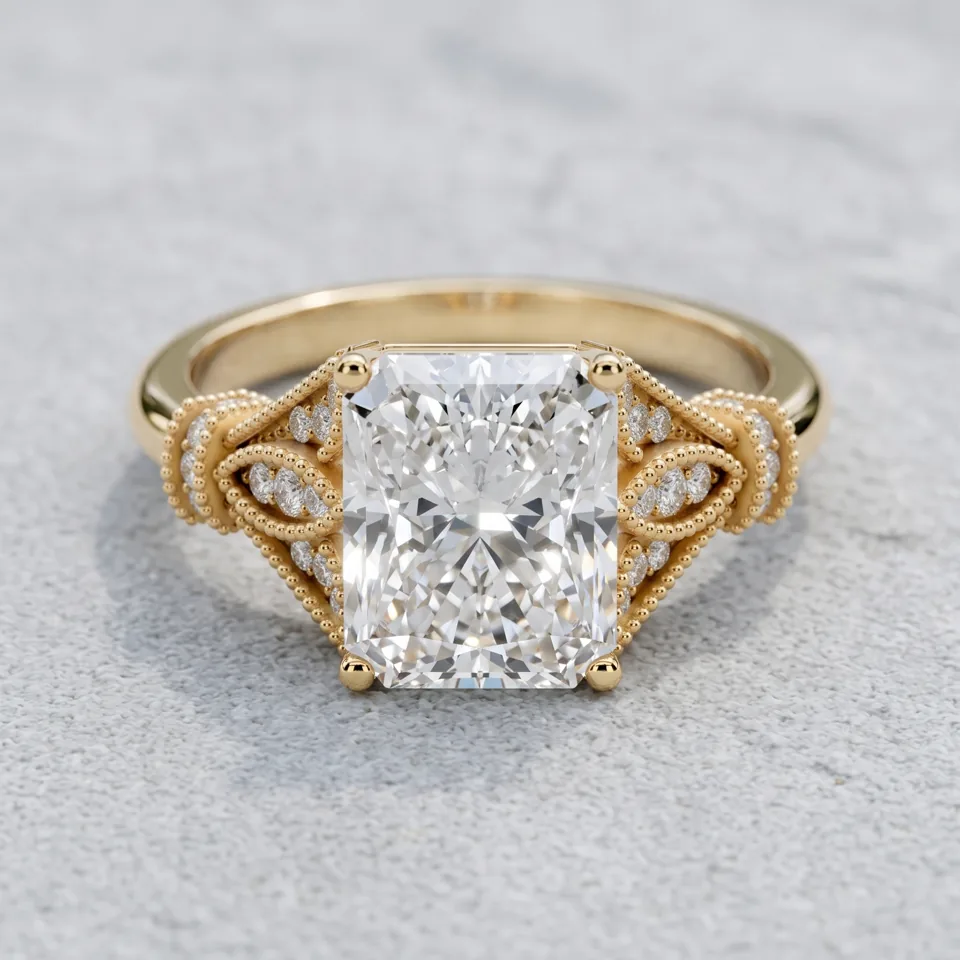
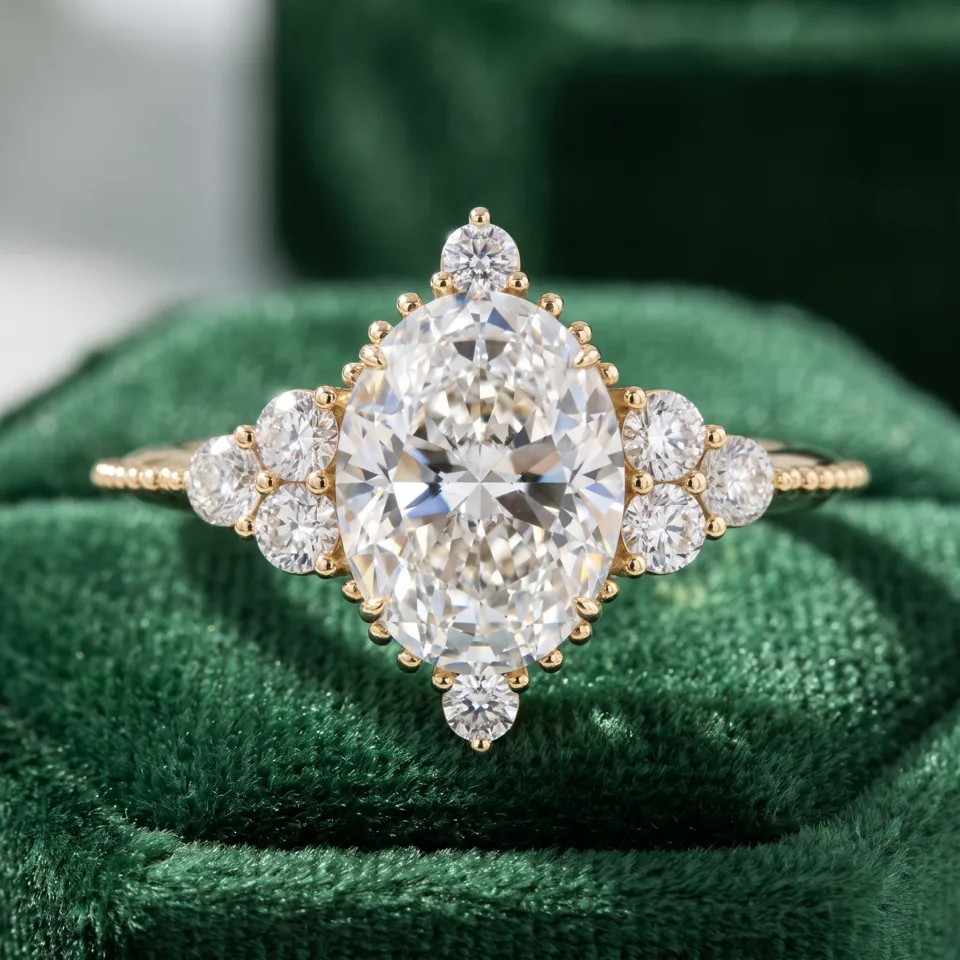
Clusters gather small stones into one bright group, a trick antique jewelers used to build sparkle without a single large stone. In this yellow gold range the clusters gather beside the center or encircle it, and the center diamond itself is picked one step later.
Every design carries milgrain. Choose a setting, a center shape and a karat.
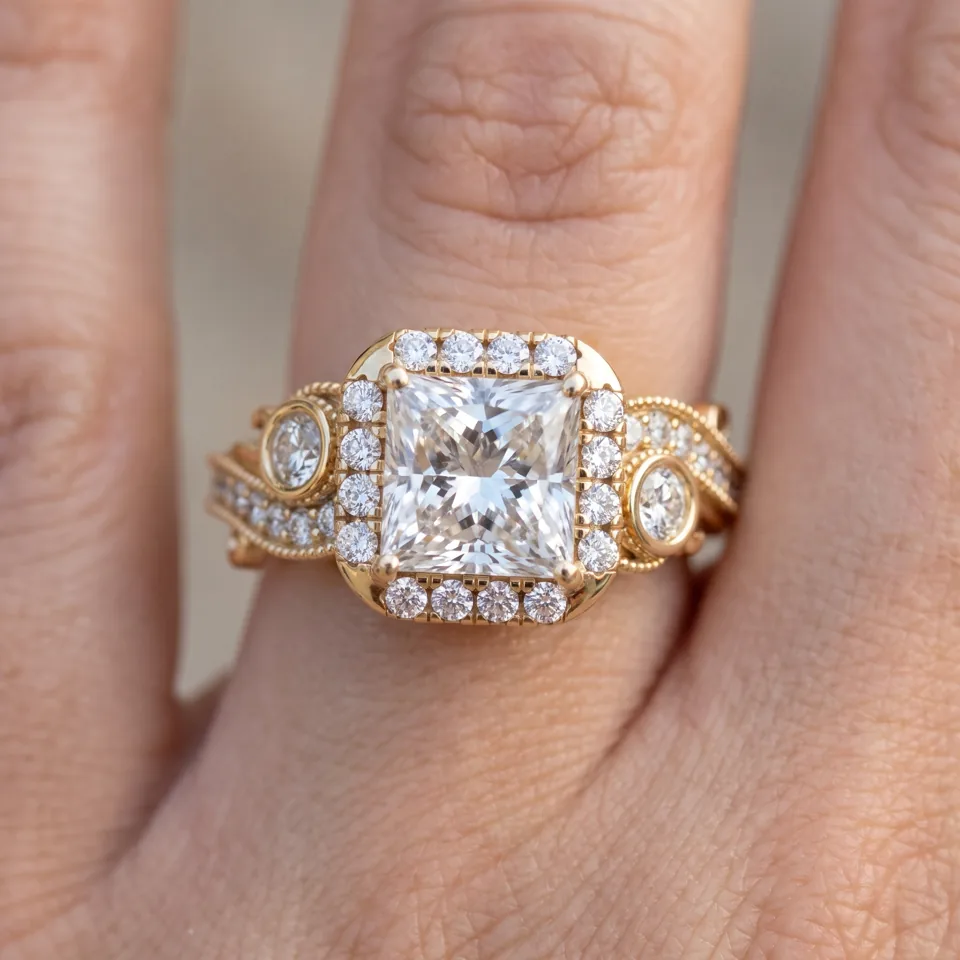
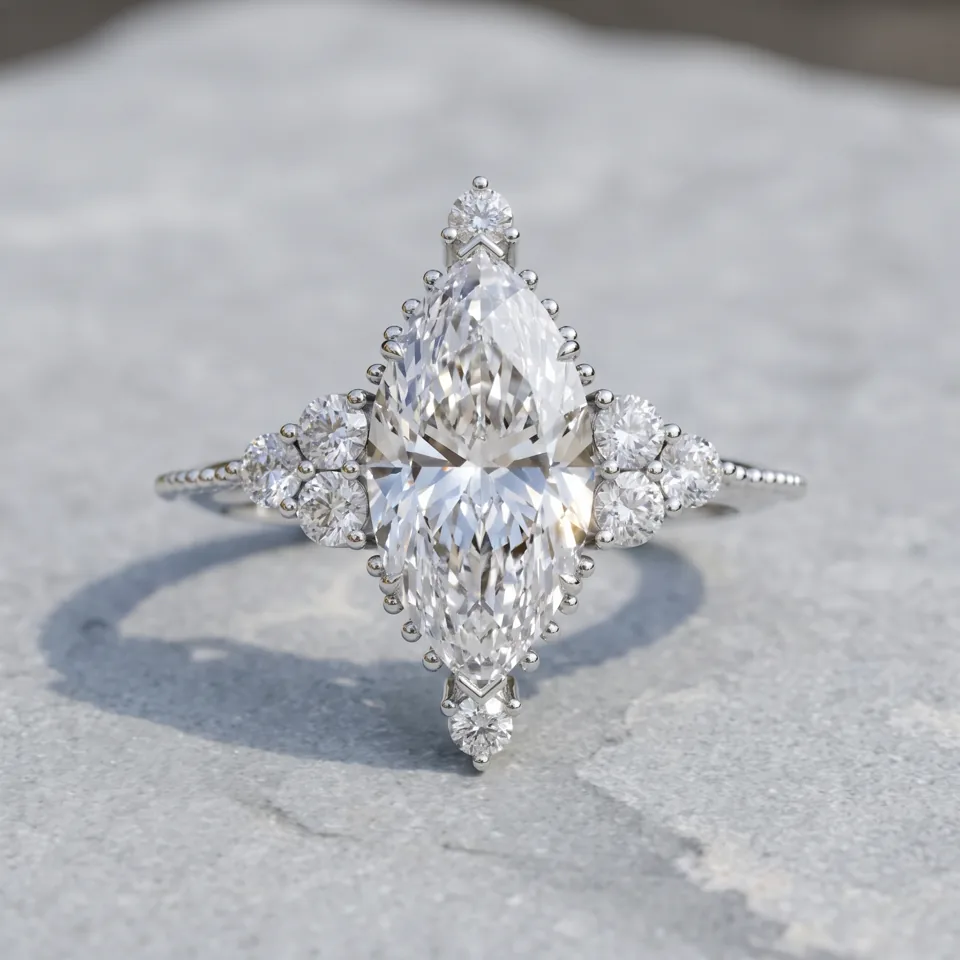
Some designs place clusters on each shoulder, flanking the center like little bouquets. Another wraps the head in a cluster halo of bezel-set stones that widens the center's apparent size. A pear design adds small clusters to a milgrain frame around the center. Shoulder clusters keep the center's outline clear; a cluster halo blurs it into one larger shape.
A couple of designs hold the cluster stones in bezels, smooth gold cups that protect them and give a softly rounded look. All of them finish edges with milgrain, the beaded line that marks a ring as vintage. Against yellow gold, the beading catches warm light.
Every design takes an oval or cushion center, and most also take round, radiant or asscher. A white center contrasts with the yellow gold. Most designs also offer green, blue, pink or yellow centers, and one takes black. Your center comes with an IGI or GIA report.
10K, 14K and 18K yellow gold are all offered. 18K has the deepest yellow; 14K balances color with hardness, which matters for small cluster prongs. Settings start near $650, most at about $800, with the center costed separately once you pick it.
Your cluster ring is made in 10–15 days and sent with free insured shipping, with 30 days to return it insured as well. You get one free resize within 60 days of delivery, and the IGI or GIA report travels with your center.