Complimentary insured shipping, both waysEngagement ring diamonds certified by IGI or GIAGrown by light. Conflict-free by natureComplimentary insured shipping, both ways
Engagement RingsWedding BandsEarrings

NecklaceBraceletsAbout
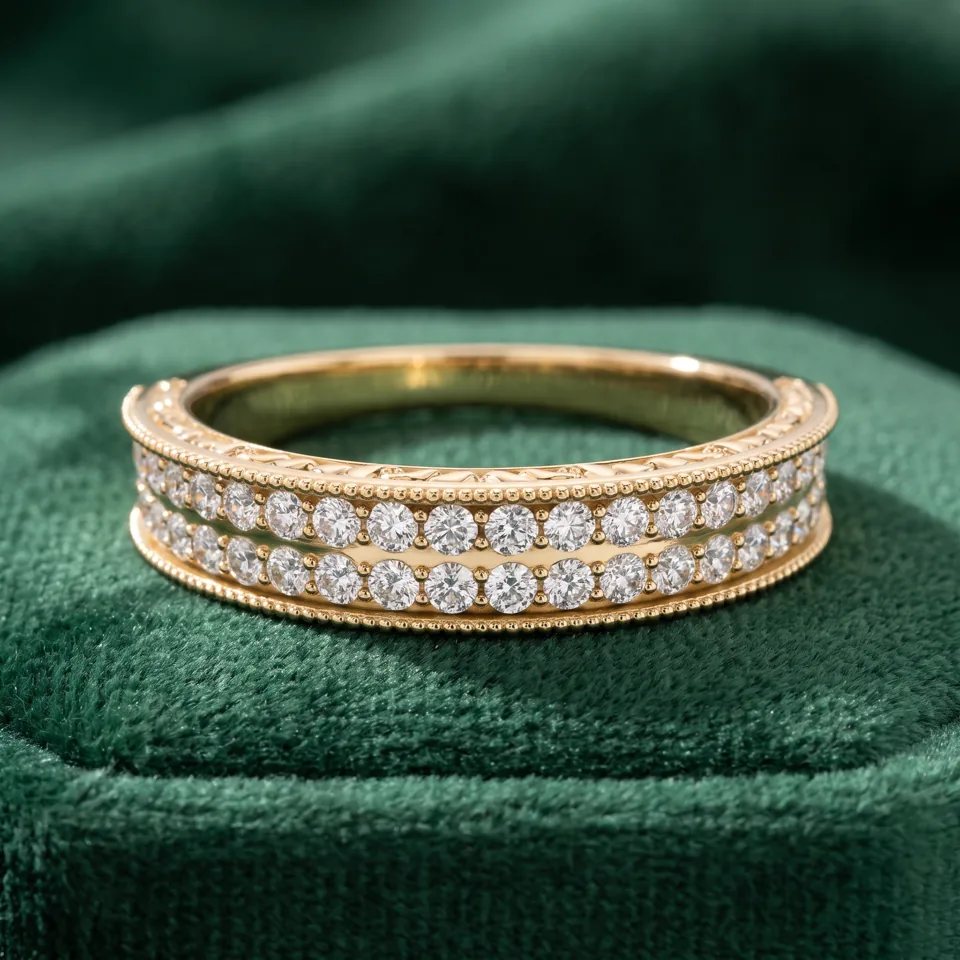
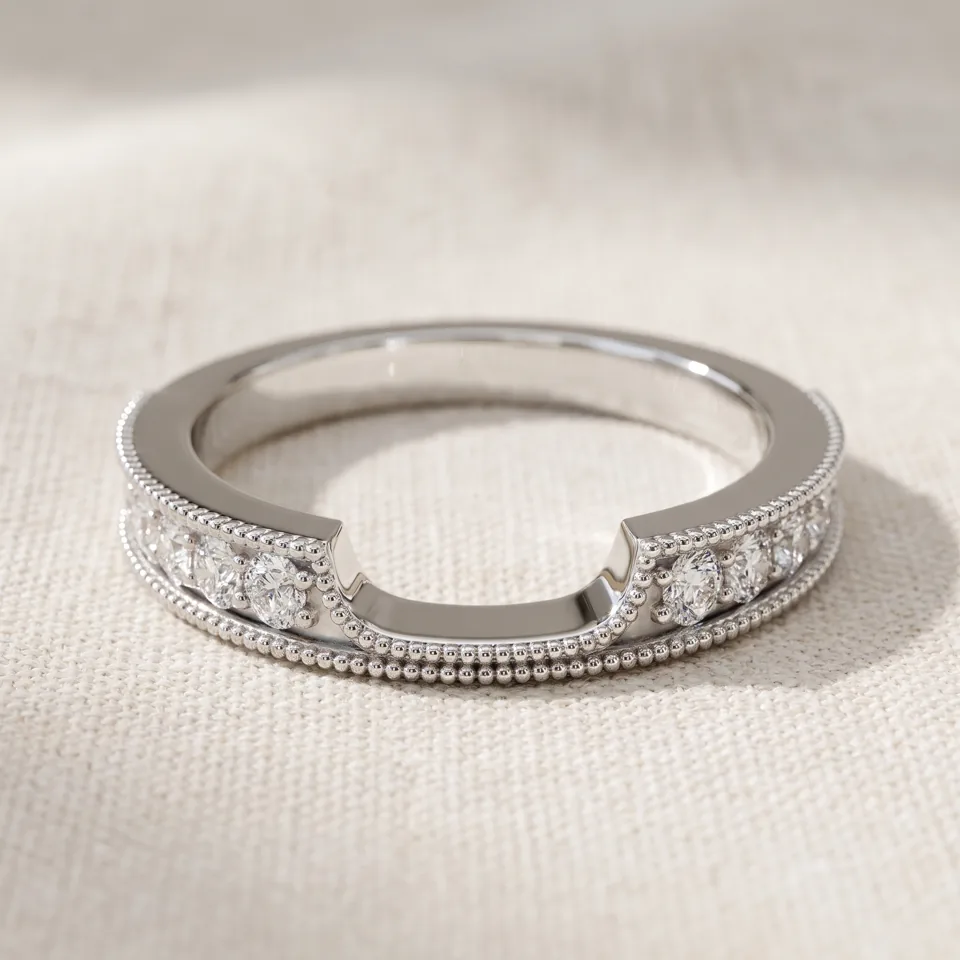
On a white gold milgrain wedding band, tiny beads of metal are pressed along the edges, a vintage finish that softens the outline of the ring. Every band here pairs that beading with lab-grown diamonds, mostly in a half eternity row.
You'll pick the pattern of the stones, 10K, 14K or 18K white gold, and the total lab-grown diamond weight.
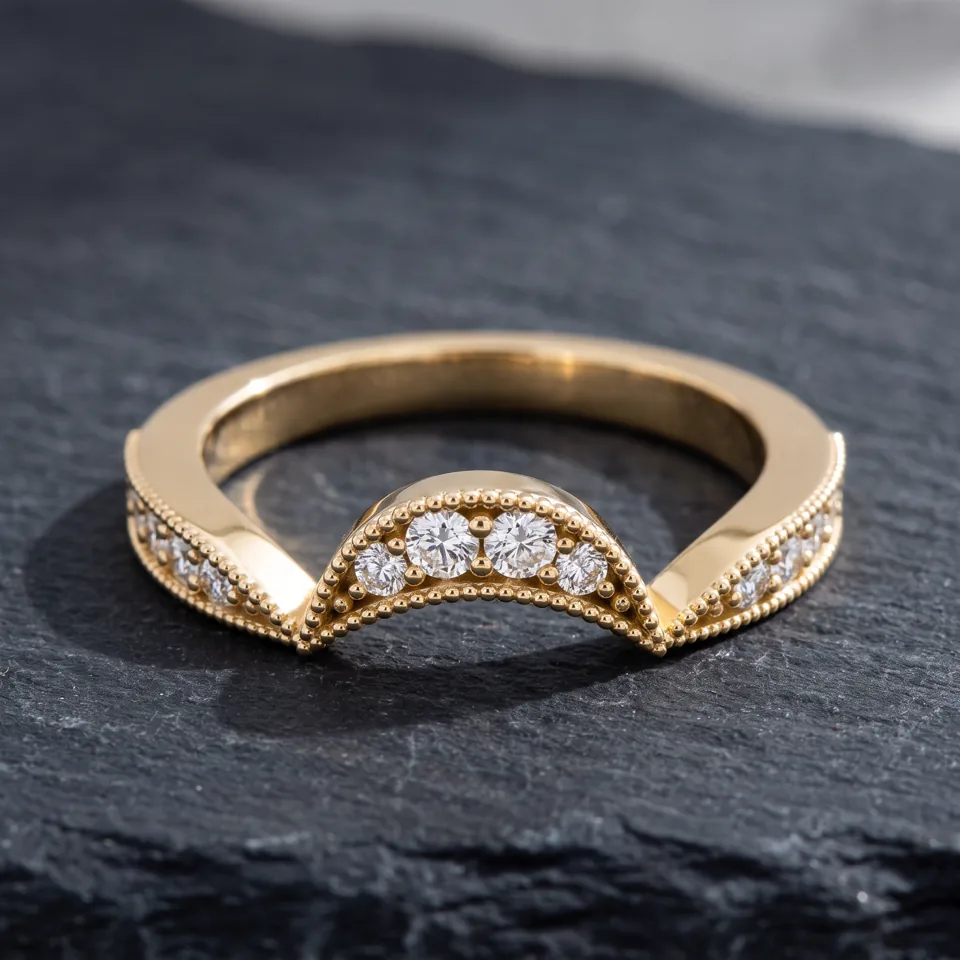
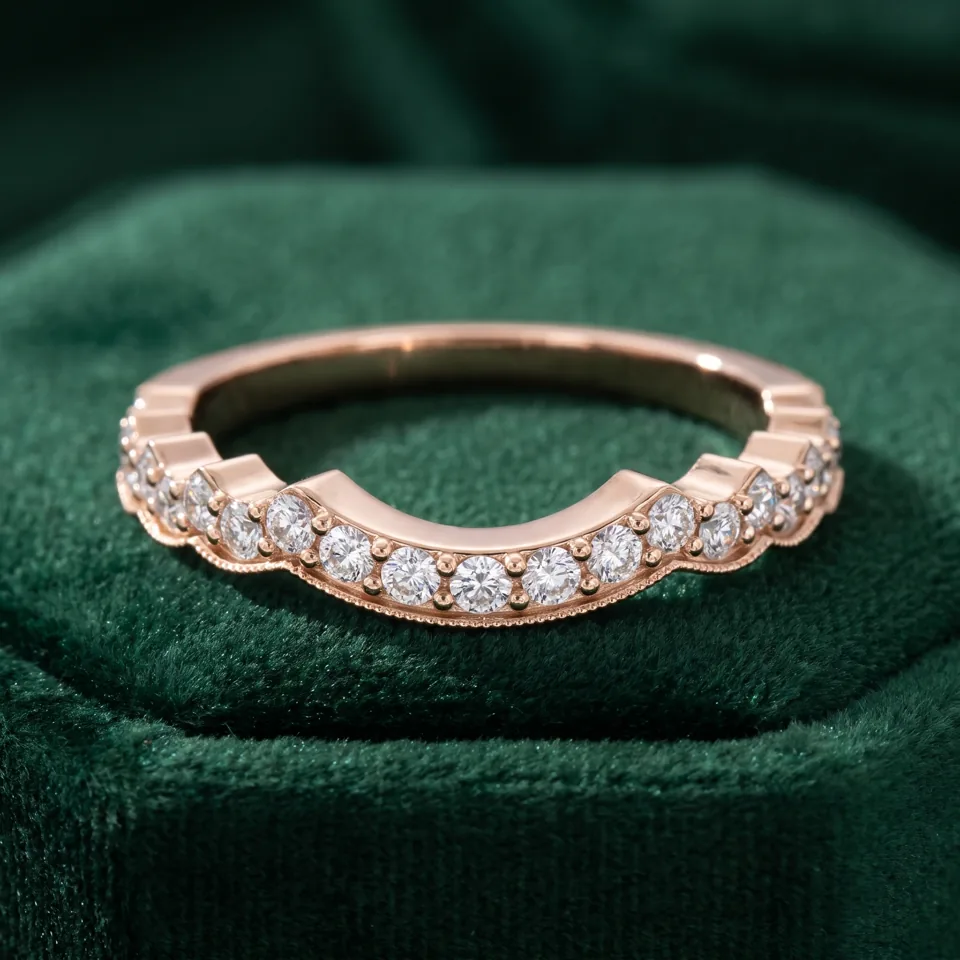
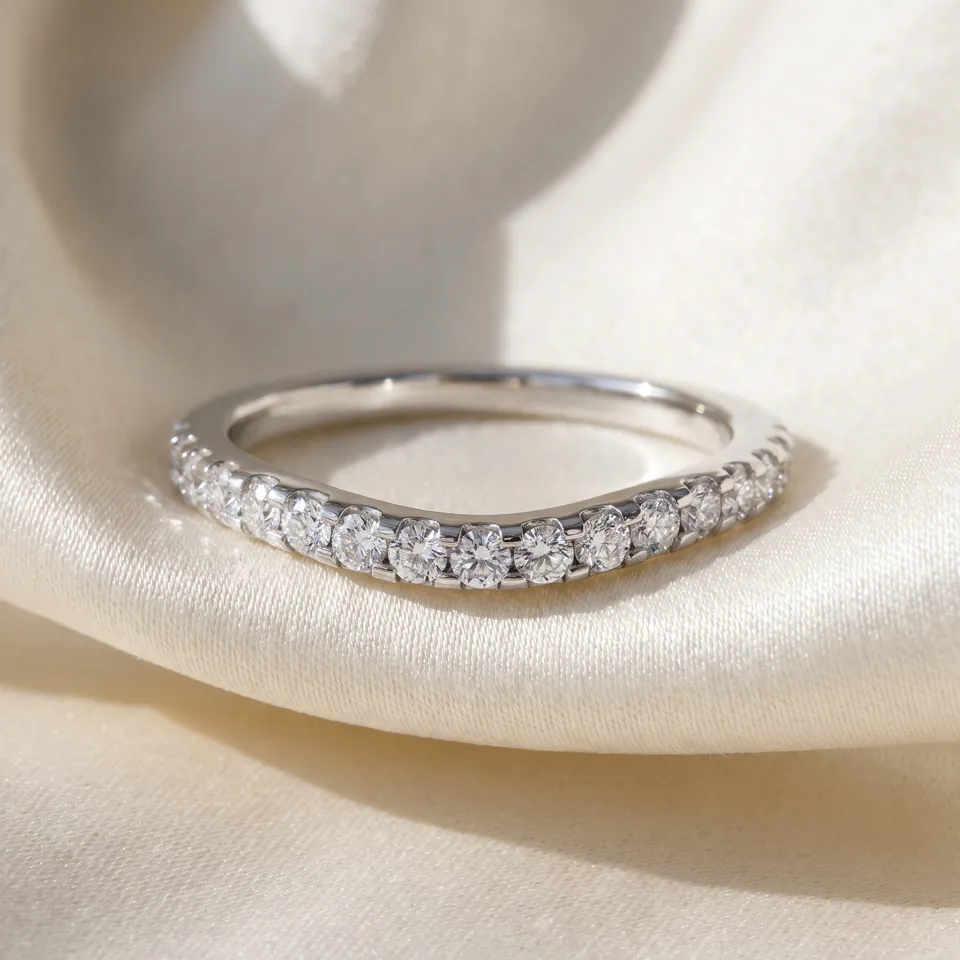 White Gold Lab-Grown Diamond Curved Wedding Bands
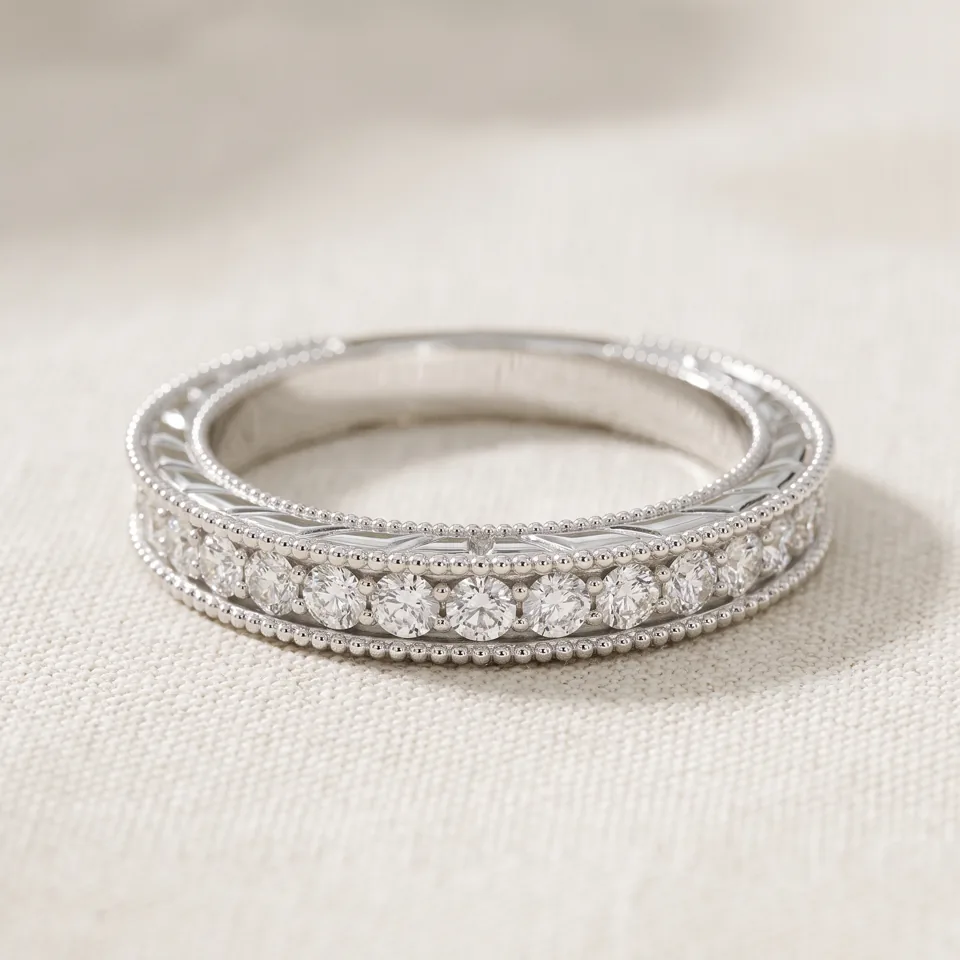 White Gold Antique Wedding Bands
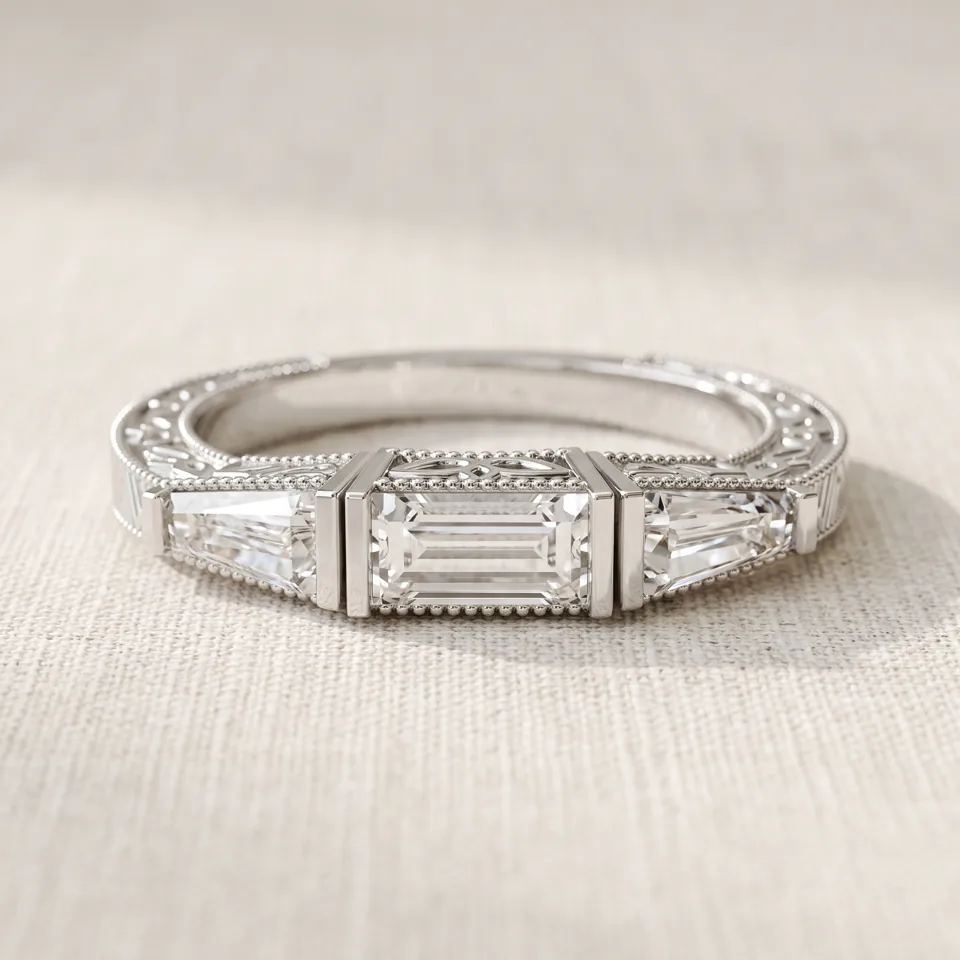 White Gold Lab-Grown Diamond Baguette Wedding Bands
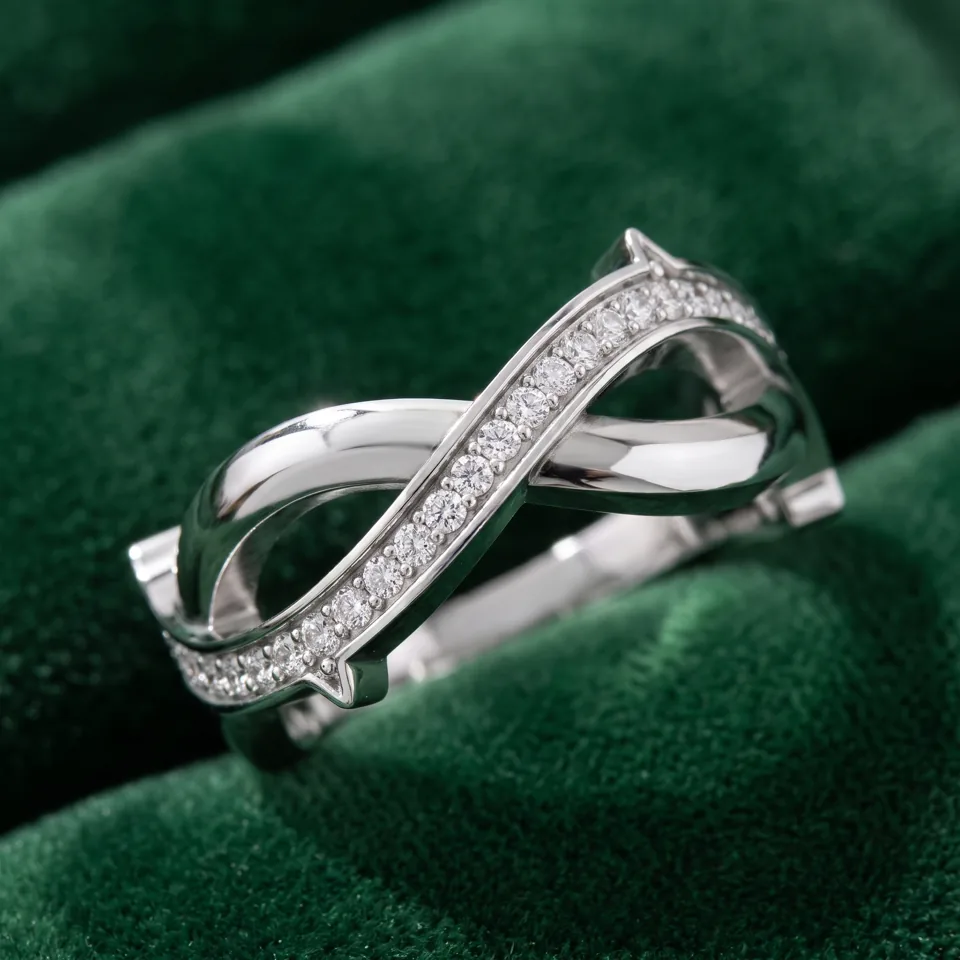 White Gold Lab-Grown Diamond Twisted Wedding Bands
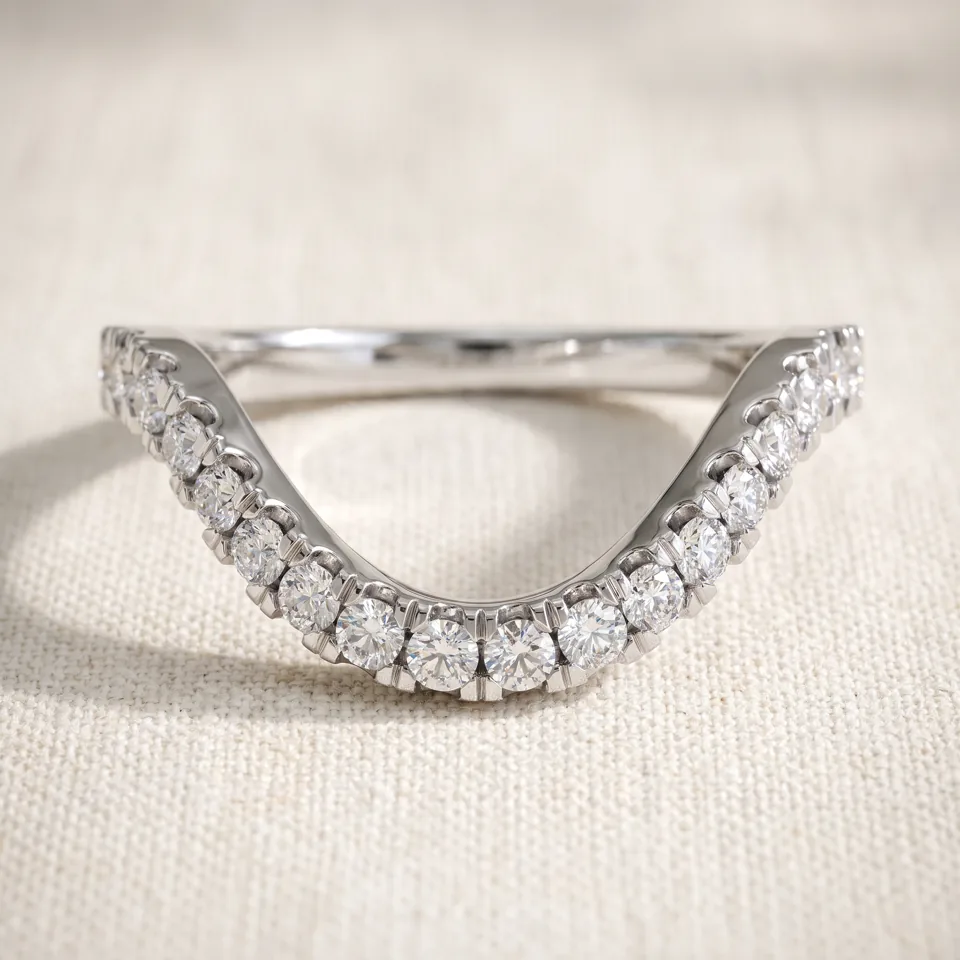 White Gold Lab-Grown Diamond Pave Wedding Bands
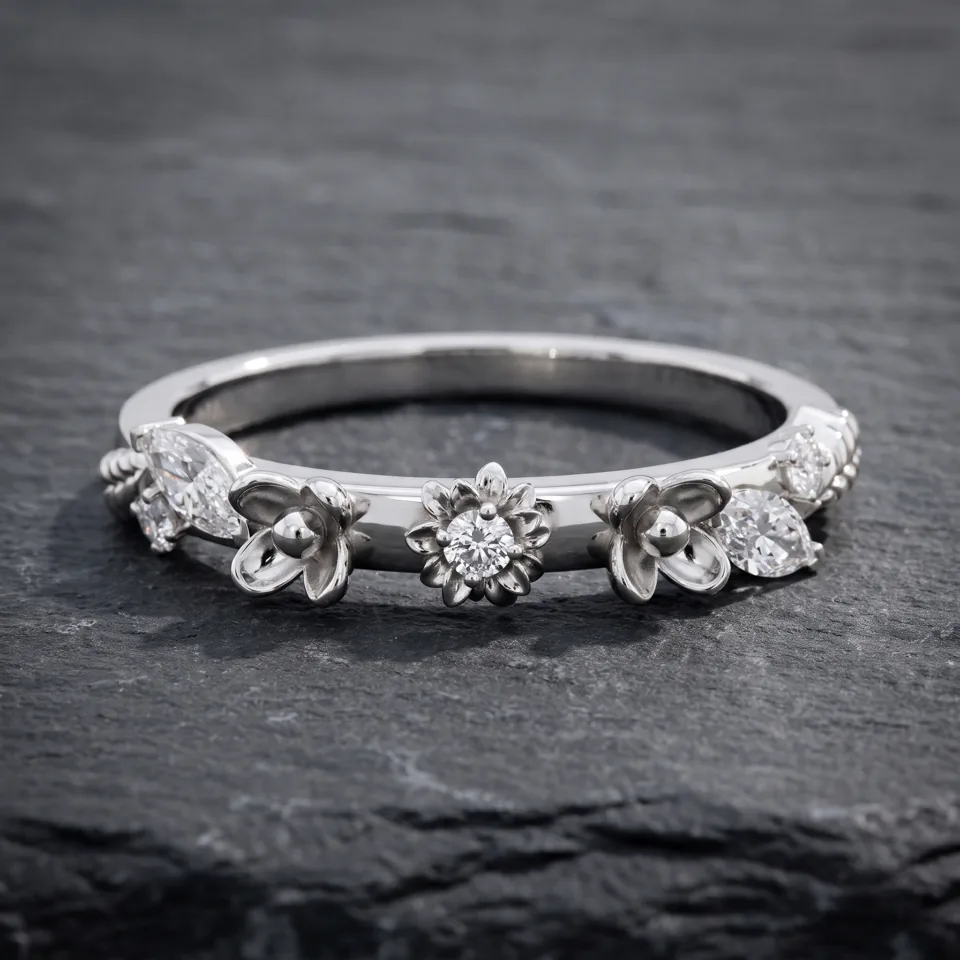 White Gold Lab-Grown Diamond Floral Wedding Bands
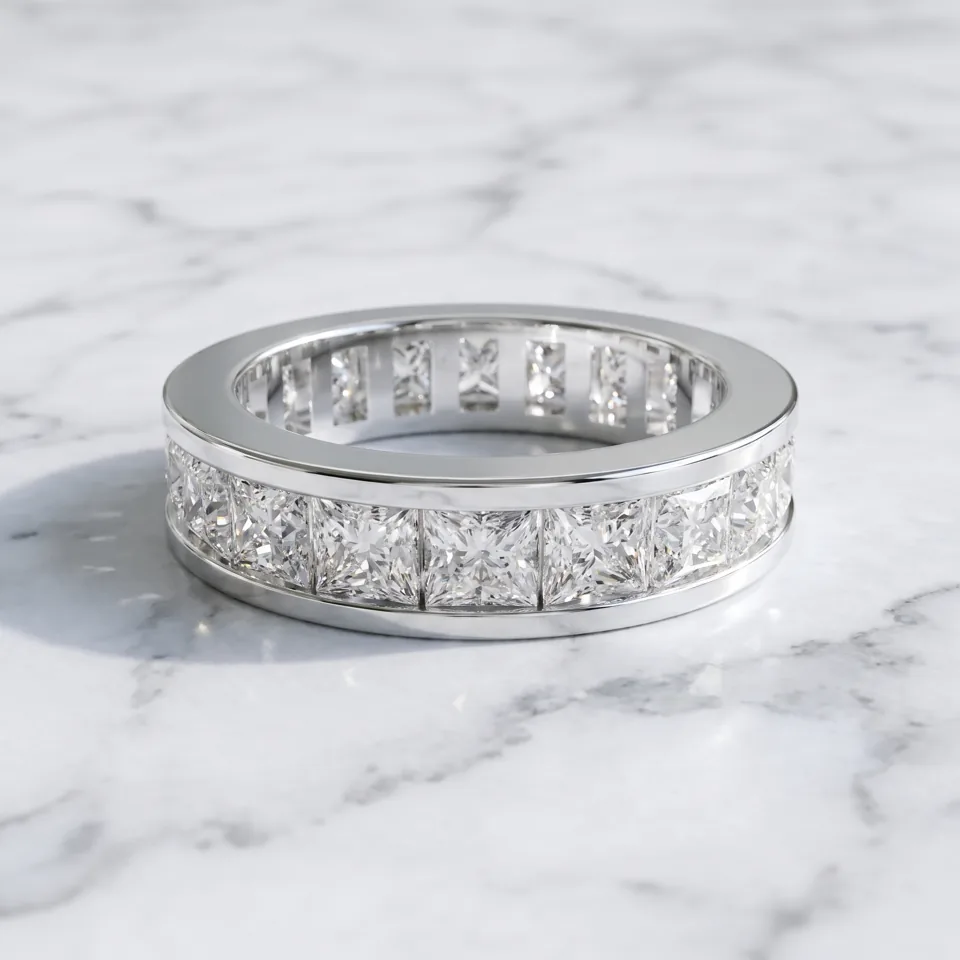 White Gold Lab-Grown Diamond Channel Set Wedding Bands
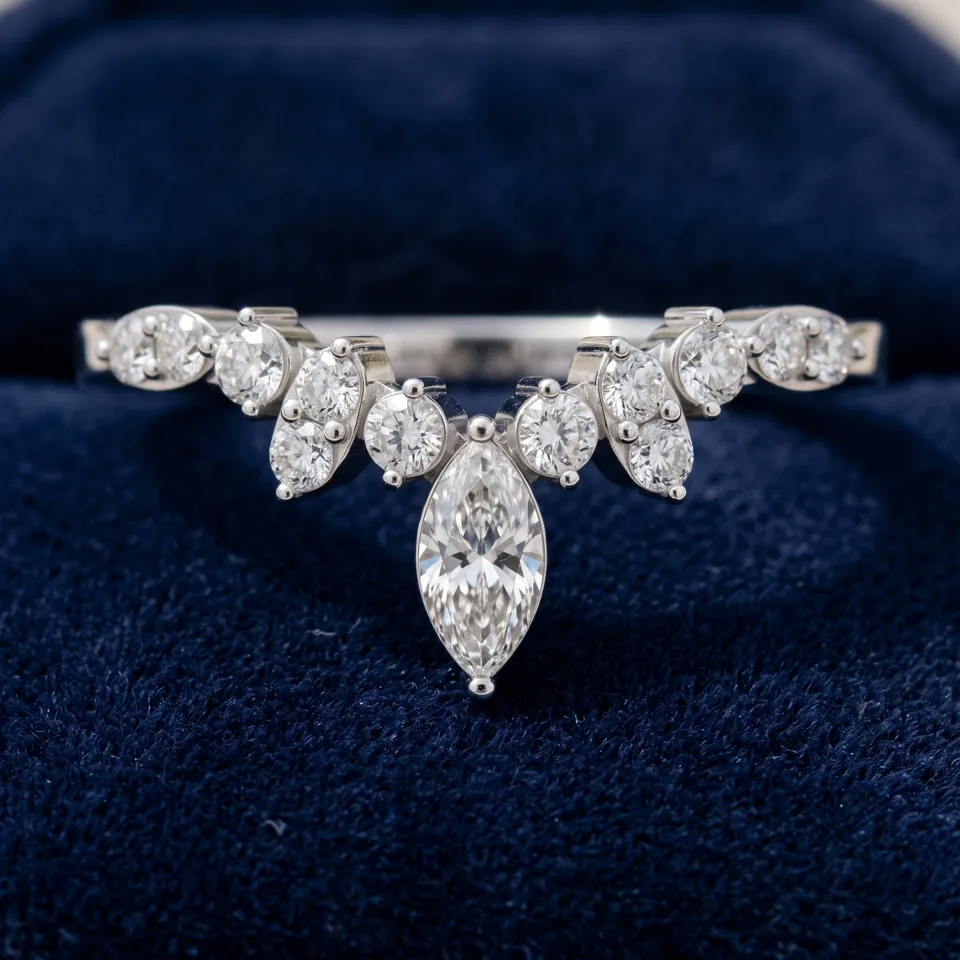 White Gold Chevron Wedding Bands
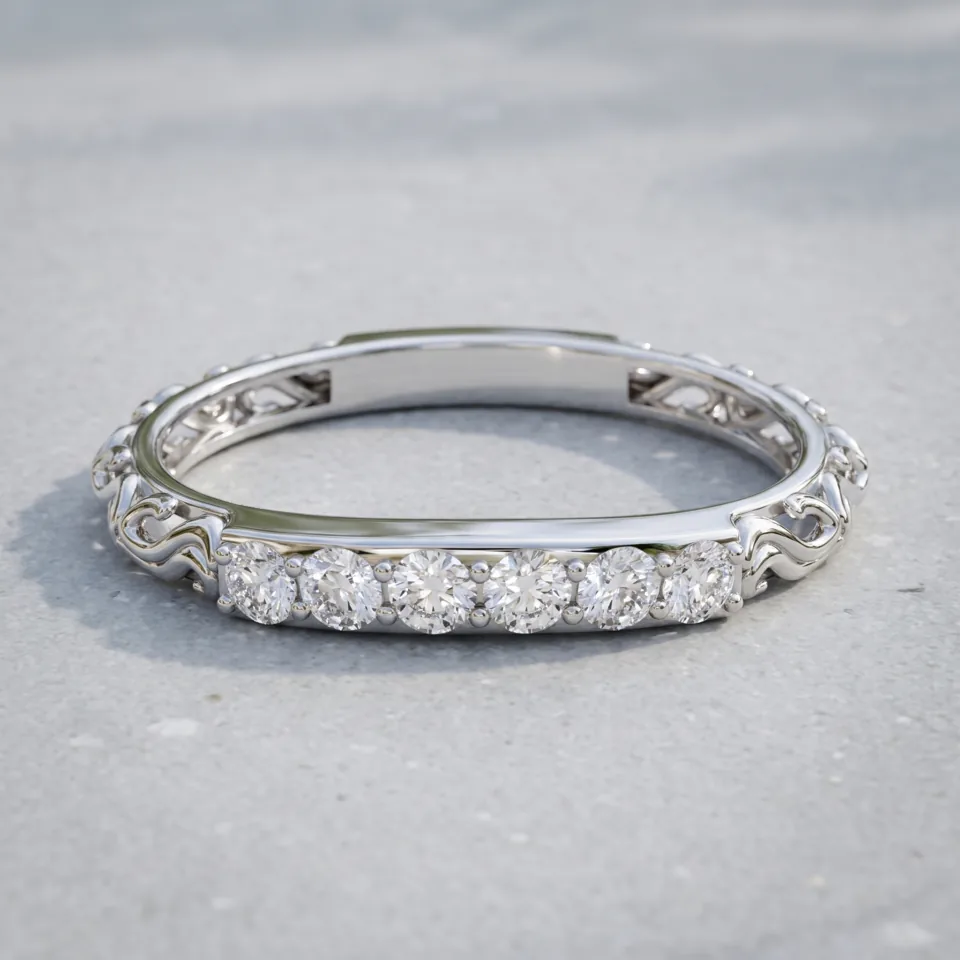 White Gold Lab-Grown Diamond Filigree Wedding Bands
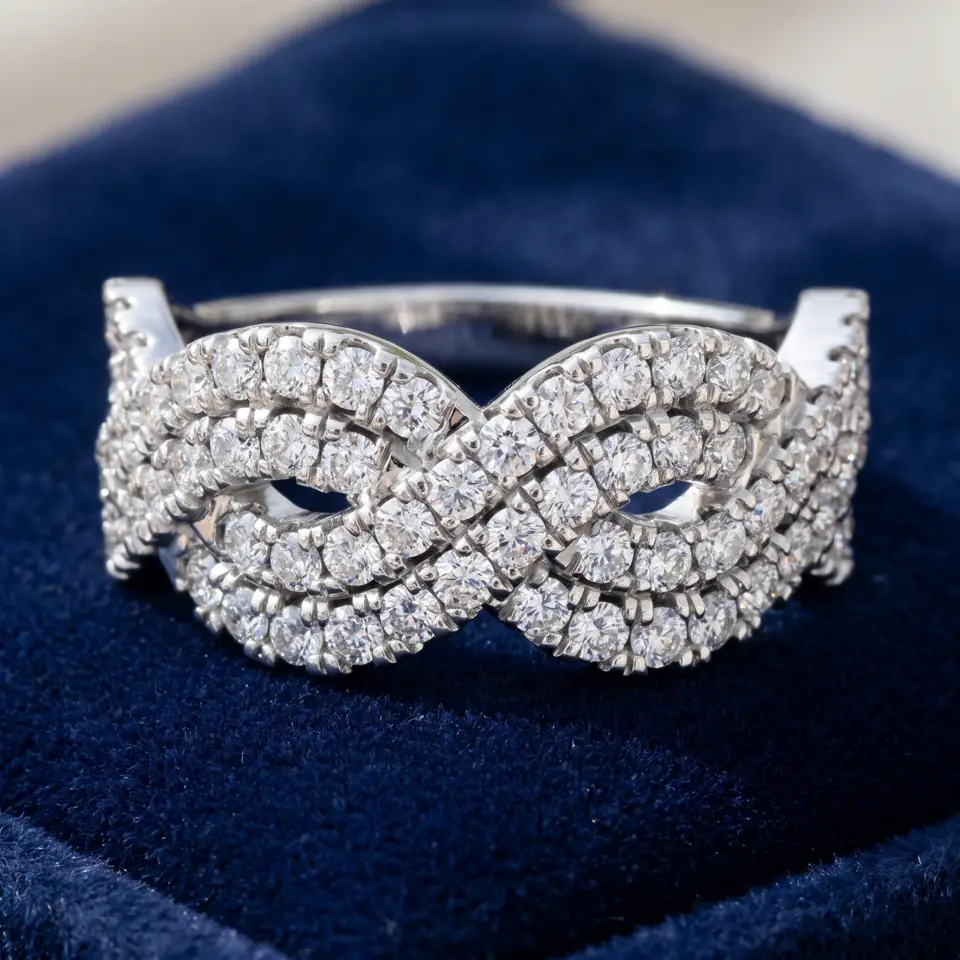 White Gold Lab-Grown Diamond Infinity Wedding Bands
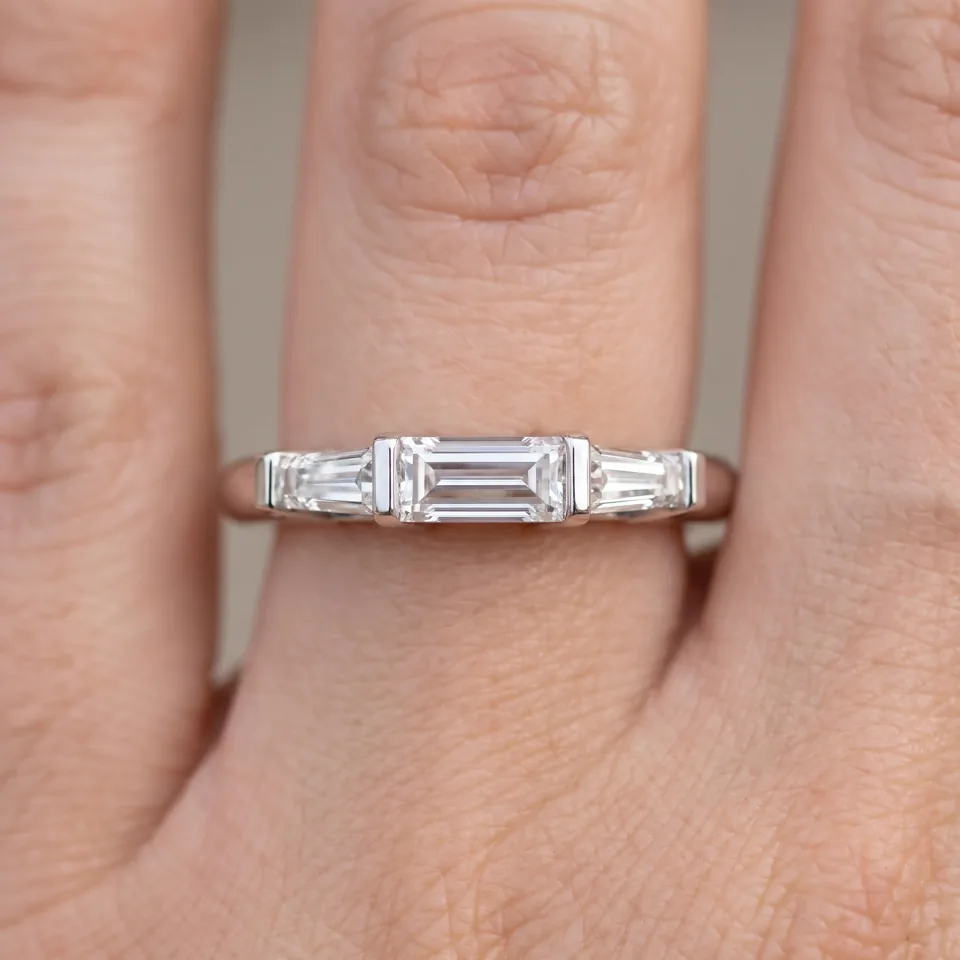 White Gold Lab-Grown Diamond Three Stone Wedding Bands
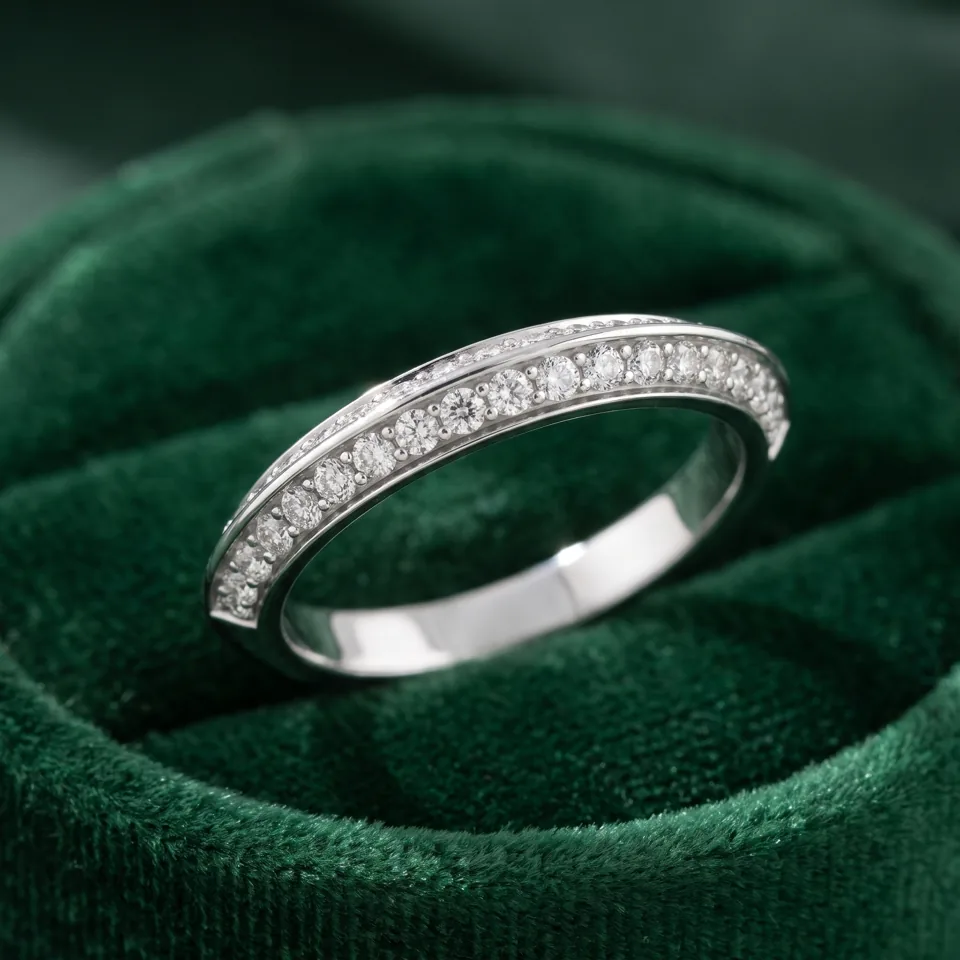 White Gold Knife Edge Wedding Bands
Milgrain is a row of small raised dots worked into the metal rim. It catches light in a fine line and makes the band look older and more detailed than a plain edge. Over many years the beads wear down slowly on the palm side, so the half eternity designs, with stones and beading on top, keep their detail where it shows.
Most designs set round lab-grown diamonds inside small milgrain frames shaped as squares, marquise outlines or pear and round frames. Pavé rows sit close together for an unbroken glitter; bezel clusters, channel settings or a chevron point show up on a few designs. Engraved sides appear on some bands for detail you see when the ring turns.
Most bands come at 0.25, 0.35 or 0.5 carats total weight. A quarter carat makes a slim companion to a detailed engagement ring; half a carat gives a bolder row that can stand on its own. A few designs reach 0.75 carats and above.
Most white gold gets a rhodium coat for extra brightness, and a jeweler can renew it once it wears thin.
Each band is made once you order and ships in 10–15 days with free insured shipping both ways, with 30 days to return it unworn. You can resize once for free in the first 60 days; going up or down more than one size means the band is remade, which takes another 10–15 days.