Complimentary insured shipping, both waysEngagement ring diamonds certified by IGI or GIAGrown by light. Conflict-free by natureComplimentary insured shipping, both ways
Engagement RingsWedding BandsEarrings

NecklaceBraceletsAbout
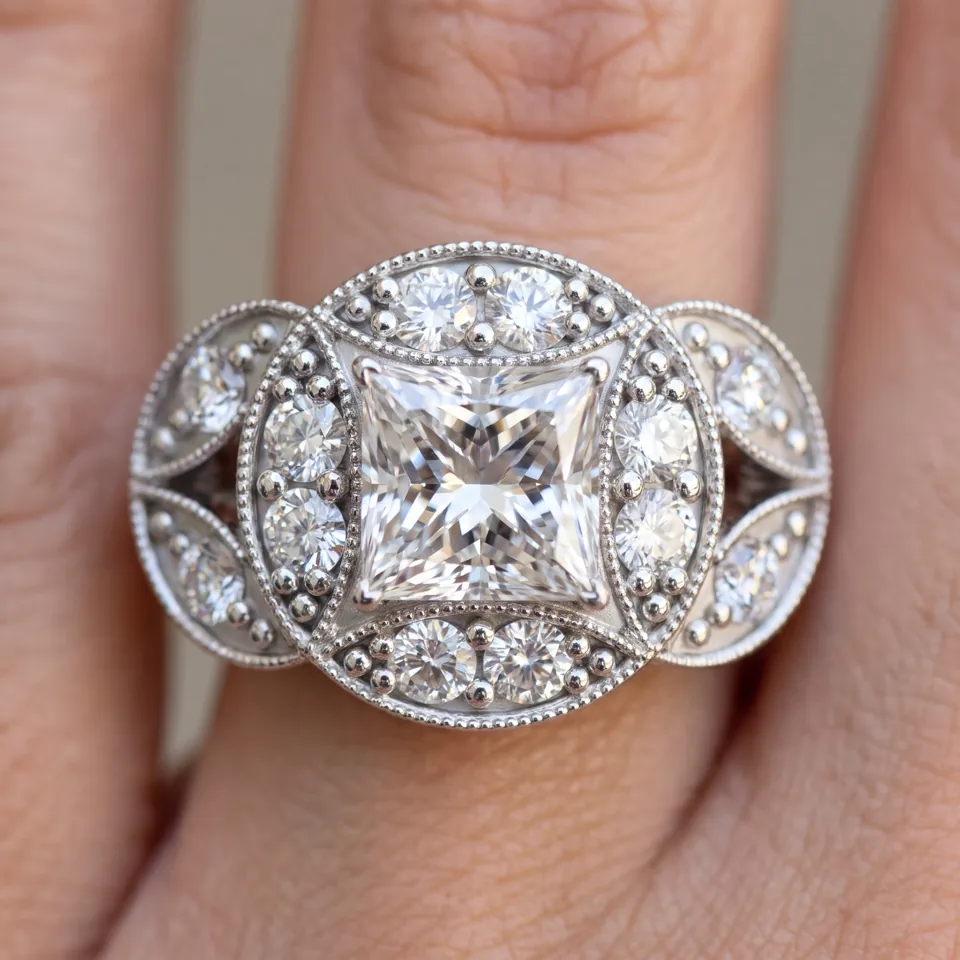
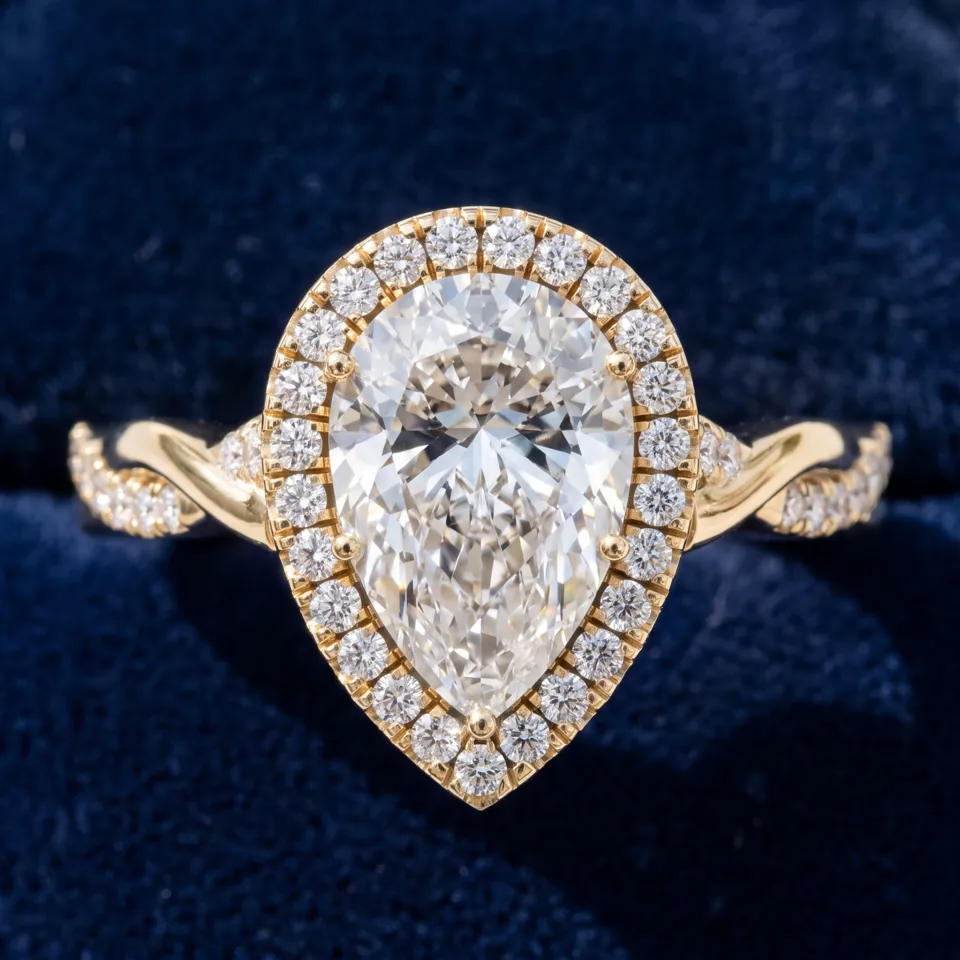
Vintage pave halo engagement rings pair a diamond frame around the center with a paved band and old-style detail. Most carry beaded milgrain; others add filigree, carved leaves or a scalloped frame. Start with the center shape, then decide how much antique detail you want against how much sparkle.
Milgrain is the lightest touch. It beads the edges of the halo and band so the outline looks softer. Filigree adds open metal scrollwork under the center or on the shoulders, so the ring looks more like an estate piece. A few designs go further with carved leaves, pointed scalloped frames or bezel-set accent points in the halo. If you want the ring to read vintage from across a room, pick filigree or a scalloped frame; if you want a clean look with a hint of age, milgrain alone is enough.
Most designs take emerald, cushion, oval, round, marquise, heart, radiant, princess, pear and asscher centers. Cushion and asscher feel closest to early 1900s rings. Oval and marquise make the halo look longer and slimmer on the finger. Most designs also accept a colored center in yellow, pink, blue or green, and a few accept black.
Gold is offered in 10K, 14K or 18K. Settings start under $300, and most fall between about $900 and $1,100. Those figures pay for the frame, band and laboratory-grown diamond accents; your center's cost comes on top once you pick it.
Each setting is cast and finished for you over 10–15 days, with free insured shipping both ways. Returns are accepted for 30 days, and your first resize within 60 days of delivery costs nothing. The center diamond comes with an IGI or GIA report.