Complimentary insured shipping, both waysEngagement ring diamonds certified by IGI or GIAGrown by light. Conflict-free by natureComplimentary insured shipping, both ways
Engagement RingsWedding BandsEarrings

NecklaceBraceletsAbout
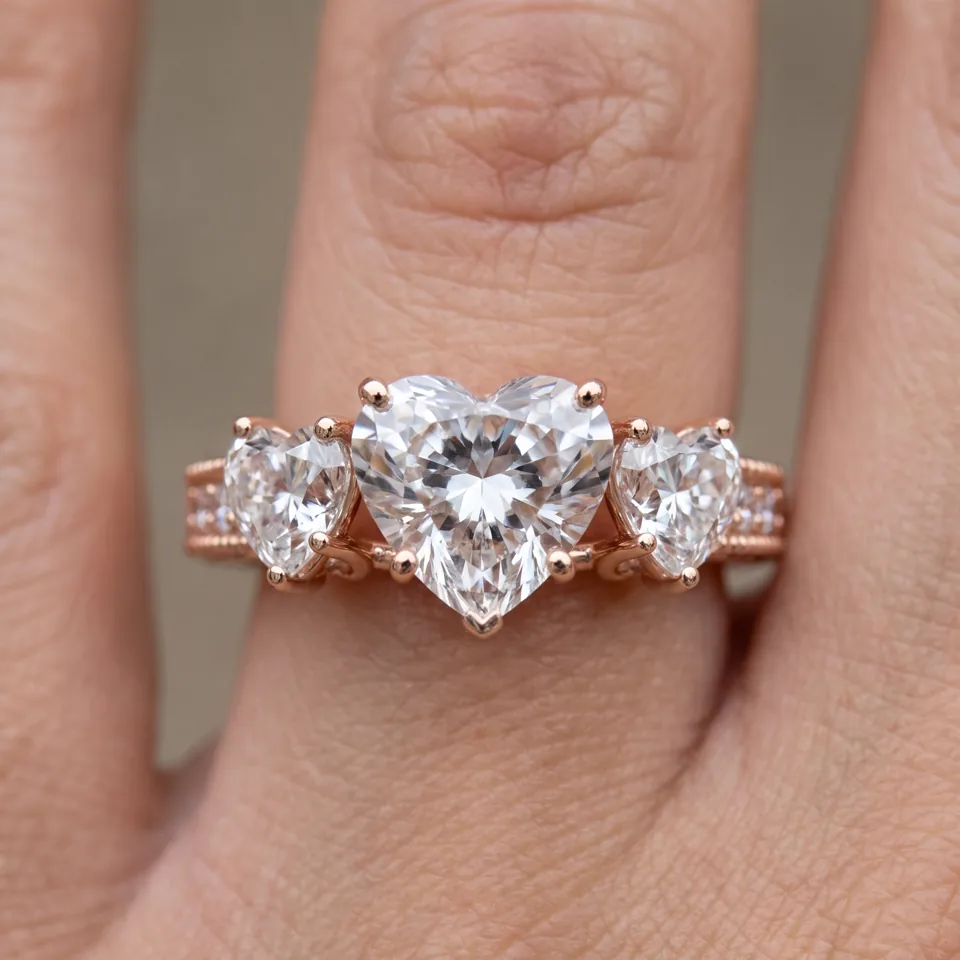
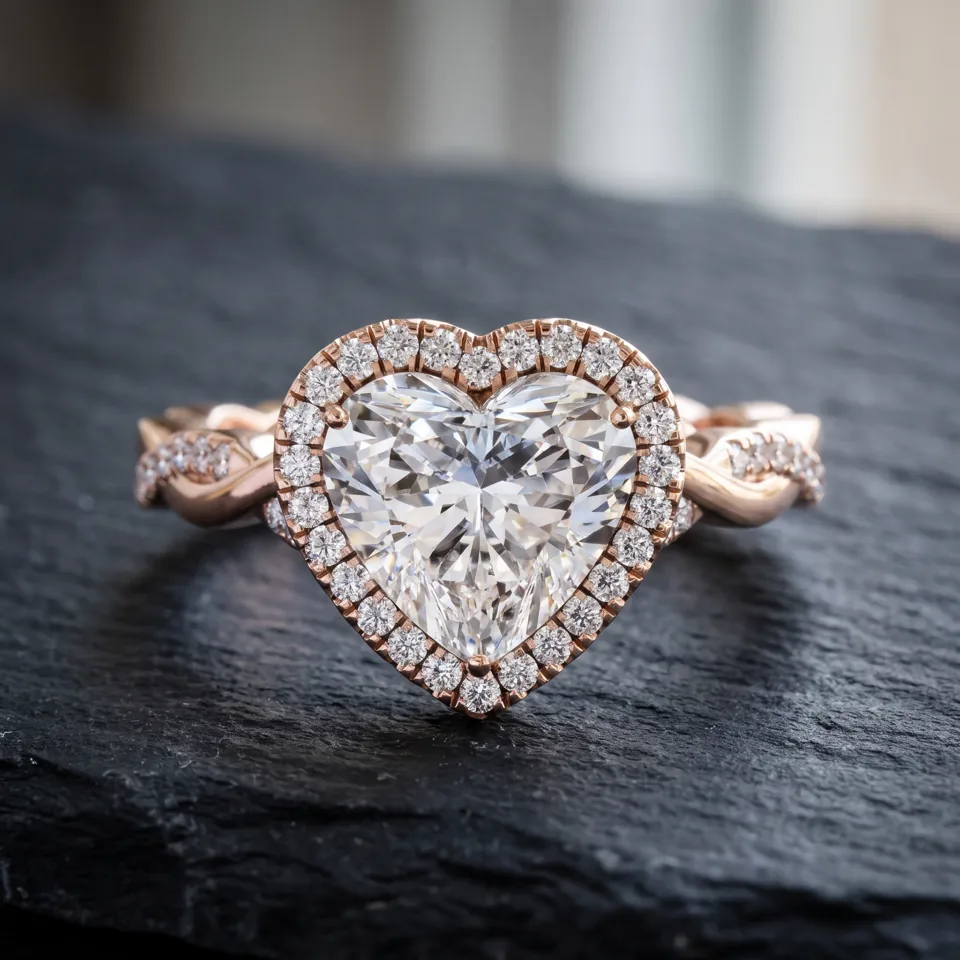
A heart-shaped center on a single-stone band makes a romantic ring that still looks clean and simple. These gold heart solitaire ring settings are available in rose, yellow and white gold, with bands from plain and tapered to pave, twisted and cathedral. Pick the gold, the karat and the band style, and the heart-shaped center comes after that, in the next step.
Two spots on a heart need extra support: the fine tip and the notch between its lobes. A V-shaped prong over the tip is the usual way to protect it in a prong head. In a bezel design, gold encircles the entire outline, the safest option for hands that rarely rest.
Rose gold leans into the romance of the shape, and yellow has an old-fashioned warmth. White gold lets an icy, colorless heart shine without any tint from the metal. Each comes in 10K, 14K or 18K. 10K stands up best to knocks; 18K has the deepest color but scratches a little more easily.
Small hearts can look almost round once set, so a slightly larger center makes the shape clearer. Look for lobes of matching size and a sharply defined notch. A fancy-color heart in pink, green, blue or yellow fits many of these settings as well. Settings begin below $450, and a typical one runs from roughly $925 to $1,100 before the center.
With your heart center chosen, the ring is made in 10–15 days and arrives with the center diamond's IGI or GIA report. Insured shipping each way is free, you have 30 days to send it back unworn, and a single free resize is yours within 60 days of delivery.