Complimentary insured shipping, both waysEngagement ring diamonds certified by IGI or GIAGrown by light. Conflict-free by natureComplimentary insured shipping, both ways
Engagement RingsWedding BandsEarrings

NecklaceBraceletsAbout
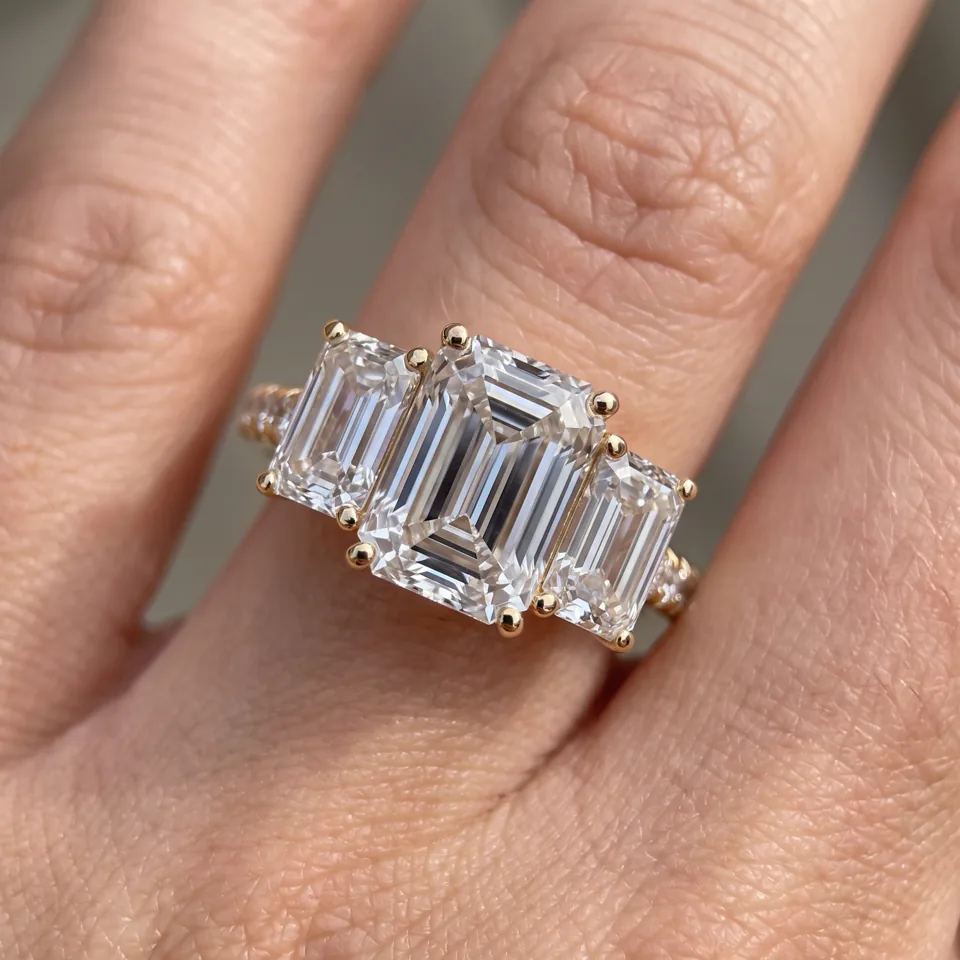
Each platinum ring here carries a 2-carat emerald cut lab-grown diamond, set and counted in the price. Looking for a 2 carat emerald cut lab-grown diamond platinum ring? You only need to settle the design around that center.
Start with the look you like: bare solitaire, pave-lined shank, side accents or halo. Then pick a band width and your ring size.
Emerald cuts are step cuts. Their facets are long rectangles stacked along the outline, which gives wide, mirror-like flashes in place of the pinpoint fire of a round brilliant. Its open table also lets you see deep into the lab-grown diamond, which means clarity matters more here than on brilliant shapes. Read the grading report that comes with the center before you order. The clipped corners help too, since they remove the sharp points that chip most easily.
Platinum keeps its white color without any rhodium coat, so it stays bright beside a colorless center. Its density makes the ring feel noticeably heavier. A scratch on platinum moves the metal aside instead of wearing it away, and over months the surface takes on a soft satin look. A quick professional polish brings back the mirror finish whenever you want it.
A 2.2 mm band is offered on every design. Most can also go slimmer, to 2 mm or 1.8 mm, which makes the long emerald outline look even longer. A few reach 2.5 mm or 2.8 mm. A slim shank also leaves space for stacking a wedding band beside it later.
We build your platinum ring after you order, which takes 10–15 days, and the lab-grown center ships with its IGI or GIA report. You pay nothing for insured shipping either way. You have 30 days to return an unworn ring with its certificate, and one resize within 60 days of delivery is on us.
At Whitemoon, a 2 carat platinum emerald cut ring starts at about $1,750 with the lab-grown center included. Most designs here fall between about $2,150 and $2,600. Halo, side stone and pave designs generally sit higher in that range, since they need extra metal and more lab-grown diamond accents. Compared with a mined diamond of the same size, a lab-grown one costs far less.